Preformed nitrile rubber tubes
Flexible closed-cell sleeves for compatible air-conditioning and refrigeration copper pipe sizes.
Review selection details →
Closed-cell elastomeric HVAC insulation
Choose nitrile rubber for air conditioner copper pipes in the required bore and wall thickness to help limit condensation, heat gain and energy loss in HVAC refrigerant lines.
Product overview
S.K. Metal supplies nitrile rubber for air conditioner installations where flexible closed-cell insulation is specified for compatible copper refrigerant lines.
Nitrile rubber insulation is valued for its flexible cellular structure and resistance to moisture ingress when joints, seams and terminations are correctly sealed. Product selection should consider pipe OD, insulation thickness, thermal conductivity, water-vapour performance, temperature limits, fire classification, outdoor protection and the approved project specification.
See what to include in your nitrile rubber enquiry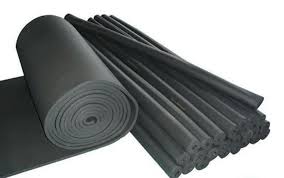
Material options
Match the bore to the copper pipe outside diameter, then verify thickness, performance classification and exposure conditions.
Flexible closed-cell sleeves for compatible air-conditioning and refrigeration copper pipe sizes.
Review selection details →An option for projects requesting a defined fire-performance classification and supporting documentation.
Check document availability →A classification option that must be confirmed against the governing test method and project requirement.
Discuss your specification →Insulation sleeves sized for compatible suction and liquid copper lines in split, packaged and VRF systems.
View VRV and VRF tubes →Greater wall thicknesses where the design calculation calls for improved condensation control or thermal resistance.
Request available thicknesses →Sheet-format insulation may be considered for larger surfaces, fittings or equipment where a tube format is unsuitable.
Check format availability →Specification guide
A complete enquiry helps confirm whether the nitrile rubber fits the pipe and suits the intended operating and installation conditions.
Important: Nitrile rubber thickness must be selected from a condensation-control and thermal calculation for the actual operating conditions. Confirm dimensions, classifications, temperature limits and installation requirements in the approved technical data.
Applications
The correct product and thickness depend on refrigerant temperature, ambient humidity, pipe size and installation exposure.
Insulation around suction and liquid copper lines connecting indoor and outdoor AC units.
Continuous insulation for refrigerant distribution lines, branches and equipment connections.
Insulated refrigerant pipework serving offices, hotels, hospitals, retail spaces and institutional buildings.
Thermal and condensation-control insulation for compatible cold piping in refrigeration installations.
Selected closed-cell insulation for compatible cold lines where the specified temperature range permits its use.
Replacement of damaged or deteriorated insulation after pipe condition and system requirements are checked.
Quality and documentation
Ask for technical data applicable to the exact nitrile rubber grade and thickness being quoted. Design teams can also consult the current ASHRAE standards and guidelines relevant to their HVAC project.
Discuss your insulation requirement →Ordering checklist
Send a pipe and nitrile-rubber insulation schedule when several refrigerant-line sizes or thicknesses are required.
Provide the outside diameter of each copper refrigerant tube requiring insulation.
List the calculated or project-specified wall thickness for every pipe size.
Include material type, classification, temperature range and any approved-make requirements.
State operating temperature, ambient conditions and whether the installation is indoor, outdoor, concealed or exposed.
Include required length or cartons, delivery location, schedule and documentation requirements.
Frequently asked questions
It limits heat transfer between the refrigerant line and surrounding air and helps prevent surface condensation when correctly selected, sealed and installed.
Match the insulation internal diameter to the copper tube outside diameter. The sleeve should fit properly without open gaps or excessive compression.
Thickness depends on pipe temperature, ambient temperature, relative humidity, pipe diameter, thermal conductivity and exposure. Use the project calculation or specification rather than a universal thickness.
Closed-cell nitrile rubber is commonly used for HVAC and refrigeration piping. Confirm its temperature range, fire classification, vapour performance and compatibility with the project conditions.
Only with the weather, UV and mechanical protection required by the insulation manufacturer and project specification. Seal joints and penetrations to maintain vapour-control continuity.
Provide copper tube OD, insulation thickness, material or classification, total quantity, operating and ambient conditions, delivery location and required documentation.
Request a quotation
Include every copper tube OD, required nitrile rubber thickness, quantity, application and delivery location. S.K. Metal will review availability and the applicable technical details.
Send your requirement