Chilled-water pipe insulation
Because cold piping can face condensation, select the bore and wall to suit the operating and ambient conditions.
Review dimensions →
Insulation Tube for hot and cold pipe systems
Insulation Tube fits around specified pipework to help limit unwanted heat transfer and surface condensation. As a result, correct sizing matters as much as material choice. Therefore, send S.K. Metal the pipe outside diameter, insulation wall thickness, required performance and quantity before ordering.
Product overview
For hot-water, chilled-water and refrigeration lines, S.K. Metal reviews flexible pipe-insulation enquiries by bore, wall thickness and specified performance.
Because the right sleeve depends on both pipe size and operating environment, buyers should state service temperature and installation location. In addition, moisture exposure and fire-performance requirements belong in the schedule. However, pipe insulation does not compensate for gaps, damaged joints or poor vapour sealing. Therefore, include fittings and installation details before ordering.
See the insulation enquiry checklist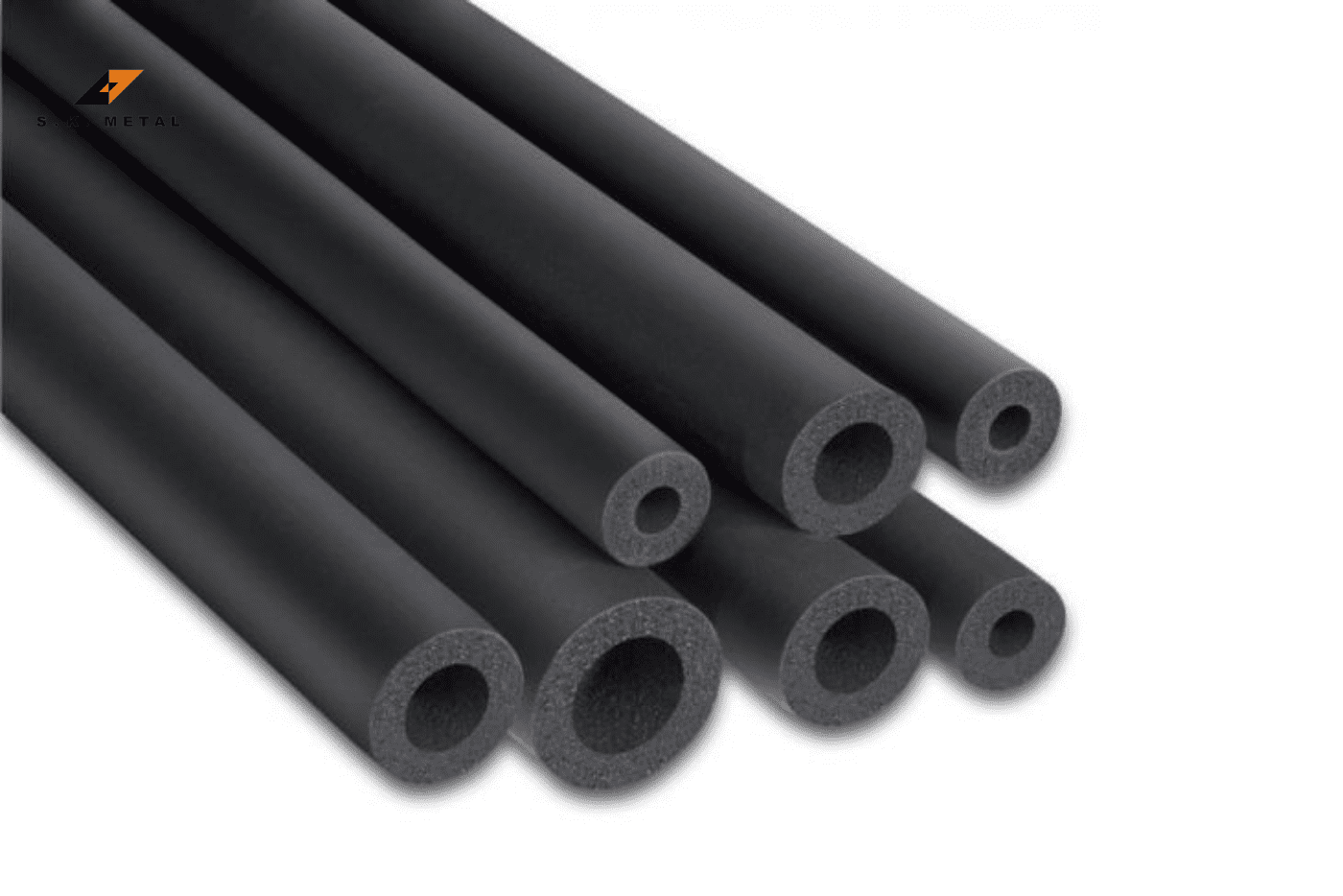
Types and configurations
First, confirm the pipe size and operating temperature. After that, identify the required wall thickness, material and installation method. For example, a cold line may need particular attention to vapour sealing.
Because cold piping can face condensation, select the bore and wall to suit the operating and ambient conditions.
Review dimensions →In addition, warm-service lines need a material rated for their normal and maximum temperature.
Discuss temperature →Similarly, refrigerant lines may need specified vapour resistance, joint sealing and outdoor protection.
Provide service details →Moreover, projects may call for different insulation walls across pipe sizes and locations.
Review wall options →For regulated buildings, request evidence of the exact fire classification required by the project.
Review documents →Finally, repeat orders can follow an approved pipe schedule and material datasheet.
Send your schedule →Specification guide
As a result, a complete pipe schedule helps prevent errors in bore size, wall thickness and material selection. Moreover, it gives the supplier a basis for checking availability.
Important: Do not select insulation by nominal pipe size alone. Instead, confirm the actual pipe OD, required wall, service temperature and installation environment.
Applications
Because systems differ, the insulation material and wall must be matched to the pipe service and ambient conditions.
For example, insulation helps limit heat gain and surface condensation when correctly specified.
Moreover, it can reduce unwanted heat loss in suitable heating circuits.
In addition, low-temperature lines need a suitable vapour-control design.
Where building services require it, confirm fire rating and installation details.
However, fittings, valves and supports also need an approved insulation detail.
Therefore, replacements should match the approved pipe and insulation schedule.
Quality and documentation
Before ordering, confirm pipe OD, insulation bore, wall thickness, service-temperature range and the required test reports. In particular, check that any fire classification applies to the exact product offered. For general hot-water pipe insulation guidance, buyers can also review the U.S. Department of Energy pipe-insulation guide.
Discuss your material requirement →Ordering checklist
For an accurate quotation, first send the pipe schedule, required insulation wall, material, performance criteria, quantity and delivery details. Then, identify any fittings or outdoor sections that need separate treatment.
First, state the pipe material, temperature and installation location.
Next, provide actual pipe OD and required insulation bore.
Then identify wall thickness, material, density and performance requirements.
In addition, state length, fittings, vapour sealing and exposure needs.
Finally, include quantity, destination, schedule and requested documents.
Frequently asked questions
In simple terms, it is a sleeve fitted around pipework to reduce unwanted heat transfer. As a result, selection depends on the pipe dimensions, operating temperature and environment.
First, measure the pipe's actual outside diameter. Then select the matching insulation inside diameter according to the supplier's fit guidance.
Because wall thickness affects thermal performance, it can also influence surface-condensation risk. However, the specified wall must follow the system designer's calculation.
Only if its approved temperature range and other performance properties suit both services. Therefore, confirm the product datasheet before installation.
For a useful quote, provide pipe OD, insulation wall, material, service conditions, length, quantity and delivery location.
Although availability depends on the specific product, buyers can request evidence of the relevant classification. In addition, state the exact test method required by the project.
Request a quotation
To begin, include pipe OD, insulation wall, material, service temperature, length, quantity and delivery location. Afterward, S.K. Metal will review the enquiry.
Send your requirement