Standard copper tube end cap
First of all, a standard cap closes one compatible copper tube end when its socket dimensions match the tube.
Review specification details →
Copper fittings for secure tube-end closure
First of all, source Copper End Caps by tube outside diameter, wall thickness, cap depth, end preparation, service requirements and quantity.
Product overview
In addition, S K Metal supplies copper caps for buyers who need to terminate, isolate or protect the ends of compatible copper tube systems.
Moreover, each cap must match the tube OD, wall thickness, socket or insertion depth, joining method and applicable service specification. However, a cap selected only by its nominal description may not fit the intended tube. Therefore, buyers should provide complete dimensional and operating details before ordering.
See what to include in your end cap enquiry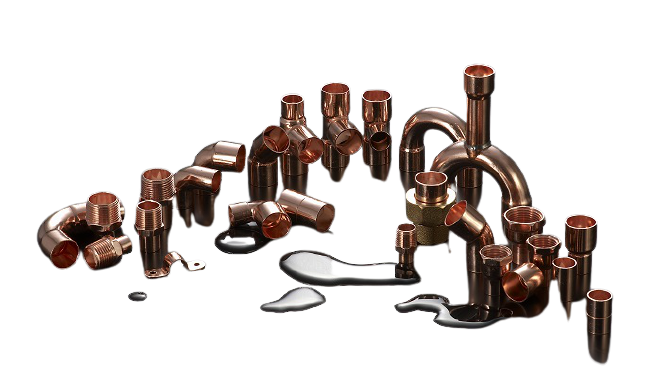
Types and configurations
First of all, confirm whether the cap is for permanent closure, testing or temporary protection. Then verify tube OD, wall, depth and joining method.
First of all, a standard cap closes one compatible copper tube end when its socket dimensions match the tube.
Review specification details →In addition, a formed cap can be reviewed by inside diameter, overall depth, material thickness and end profile.
Request size availability →However, caps intended for brazing require compatible clearances, clean surfaces and an approved joining procedure.
Define your joining method →Moreover, HVAC and refrigeration enquiries should identify tube dimensions, refrigerant service and cleanliness requirements.
Discuss service requirements →Furthermore, temporary protection applications should state whether the cap is needed for storage, transit or fabrication.
Explain the intended use →Finally, drawing-based diameter, depth, thickness and edge details can be reviewed for OEM and project requirements.
Upload a dimensional drawing →Specification guide
Therefore, a complete specification helps prevent errors in tube fit, cap depth, material thickness, end preparation and joining requirements.
Important: Do not select a cap from nominal size alone. Therefore, the system designer should approve material, dimensions, cap thickness, ratings and joining procedure.
Applications
Because systems differ, the correct cap depends on tube dimensions, closure purpose, joining method and operating conditions.
For example, compatible caps can close selected refrigerant tube ends during assembly or approved system installation.
Moreover, specified end caps can terminate unused compatible connections where the system design permits.
In addition, suitable caps provide permanent closure at designated ends of compatible copper pipework.
Furthermore, test closures must be engineered for the stated test method, pressure and safety procedure.
However, protective caps used during storage or fabrication may require different fit and retention details.
Therefore, repeat components should be approved by drawing, sample, tolerance and inspection criteria.
Quality and documentation
Before ordering, define the diameter, depth, thickness and edge checks required for the exact Copper End Caps. In addition, designers can review the Copper Tube Handbook for general information about copper tube and joining practices.
Discuss your material requirement →Ordering checklist
For an accurate quotation, send the fitting schedule or drawing together with the complete tube and service specification.
First of all, state whether the closure is permanent, test-related or for temporary protection.
Next, provide tube OD, wall thickness, cap depth, insertion depth and tolerances.
Then list cap thickness, closed-end shape, open-edge form and surface requirements.
In addition, state medium, pressure, temperature, joining method and equipment reference.
Finally, include pieces, sample approval, packaging, destination, schedule and documentation.
Frequently asked questions
In general, they close, isolate or protect designated ends of compatible copper tubing. The exact cap must suit the intended permanent or temporary service.
In addition, provide tube OD, tube wall, cap inside diameter, overall depth, insertion depth, cap thickness and tolerances.
Suitability depends on dimensions, cleanliness, material and system requirements. However, the designer or installer must confirm the cap for the refrigerant and operating conditions.
However, feasibility depends on diameter, material thickness, quantity and tooling. Therefore, submit a dimensional drawing for review.
In general, the approved method depends on cap geometry and system specification. Consequently, state brazing, soldering, press-fit or another required method.
Yes, but availability varies by order. Therefore, list material, dimensional, inspection and traceability requirements before quotation.
Request a quotation
To begin, include tube OD, wall thickness, cap diameter, depth, thickness, material, service, quantity and delivery location. Afterward, S K Metal will review availability and quotation details.
Send your requirement